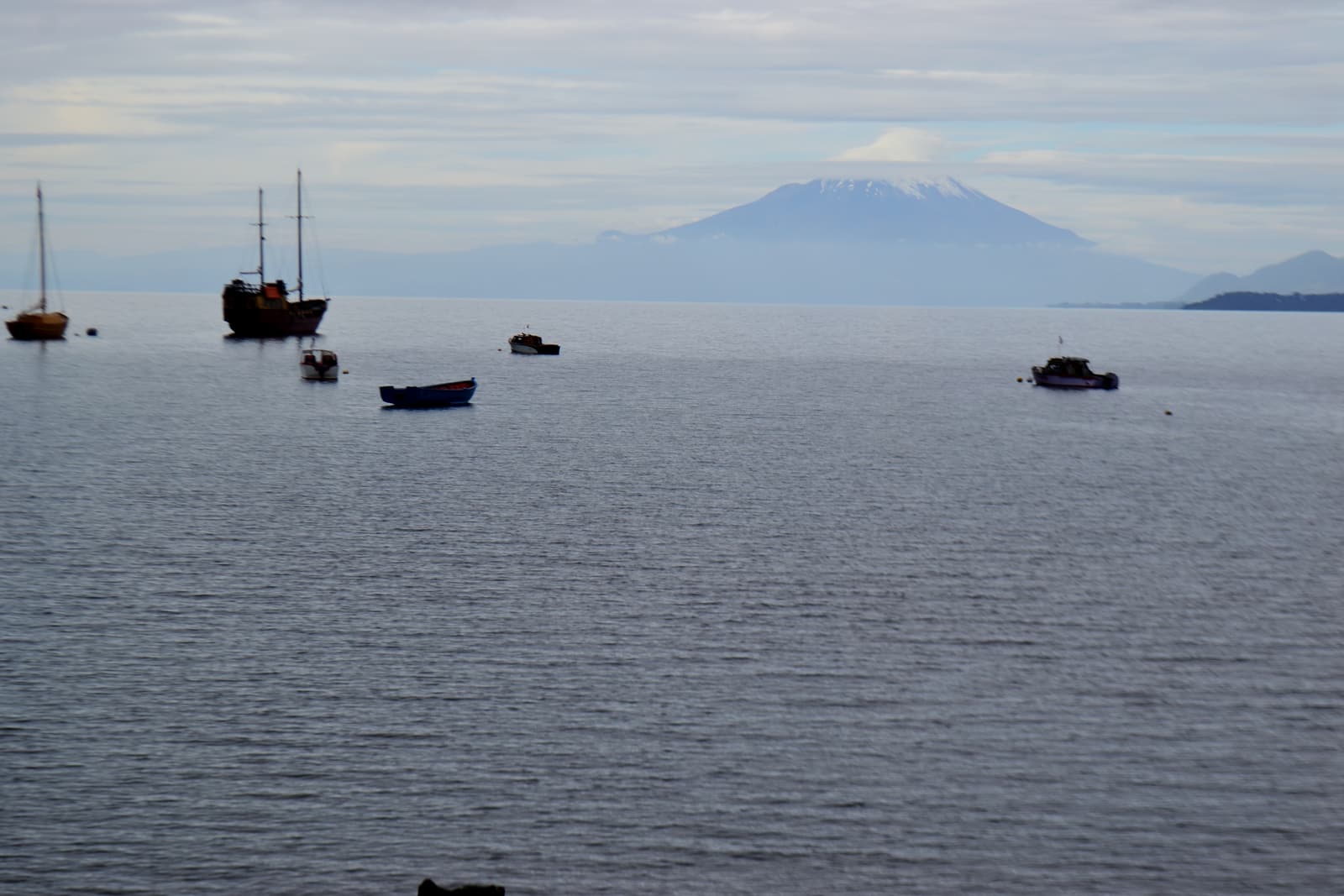
Puerto Varas is a small town with a big backyard. This guide covers how long to stay, how to use the town as a base, what everything costs and how to plan around the famous weather.
A short history
The shores of Lake Llanquihue were home to the Mapuche-Huilliche people long before Europeans arrived. In the 1850s the Chilean state, through its colonisation agent Vicente Pérez Rosales, settled German immigrant families around the lake to farm the dense forests. Puerto Varas grew from a small lake port in the 1850s into the region’s holiday town; its wooden houses, Lutheran and Catholic churches, bakeries and beer are the legacy.
How long do you need?
- Two nights — the town, plus the Osorno volcano and Petrohué falls. Tight, and at the mercy of the weather.
- Three to four nights — the version we recommend: add Todos los Santos lake or rafting, Frutillar, and a spare day for rain.
- A week — add Chiloé (ideally with a night in Castro), the lake loop, Cochamó or a serious hike.
Getting there
Most visitors fly from Santiago to El Tepual near Puerto Montt, 40 minutes away. Overnight buses run from Santiago, and the Cruce Andino links Puerto Varas with Bariloche in Argentina. Our getting here guide compares every option.
What to see
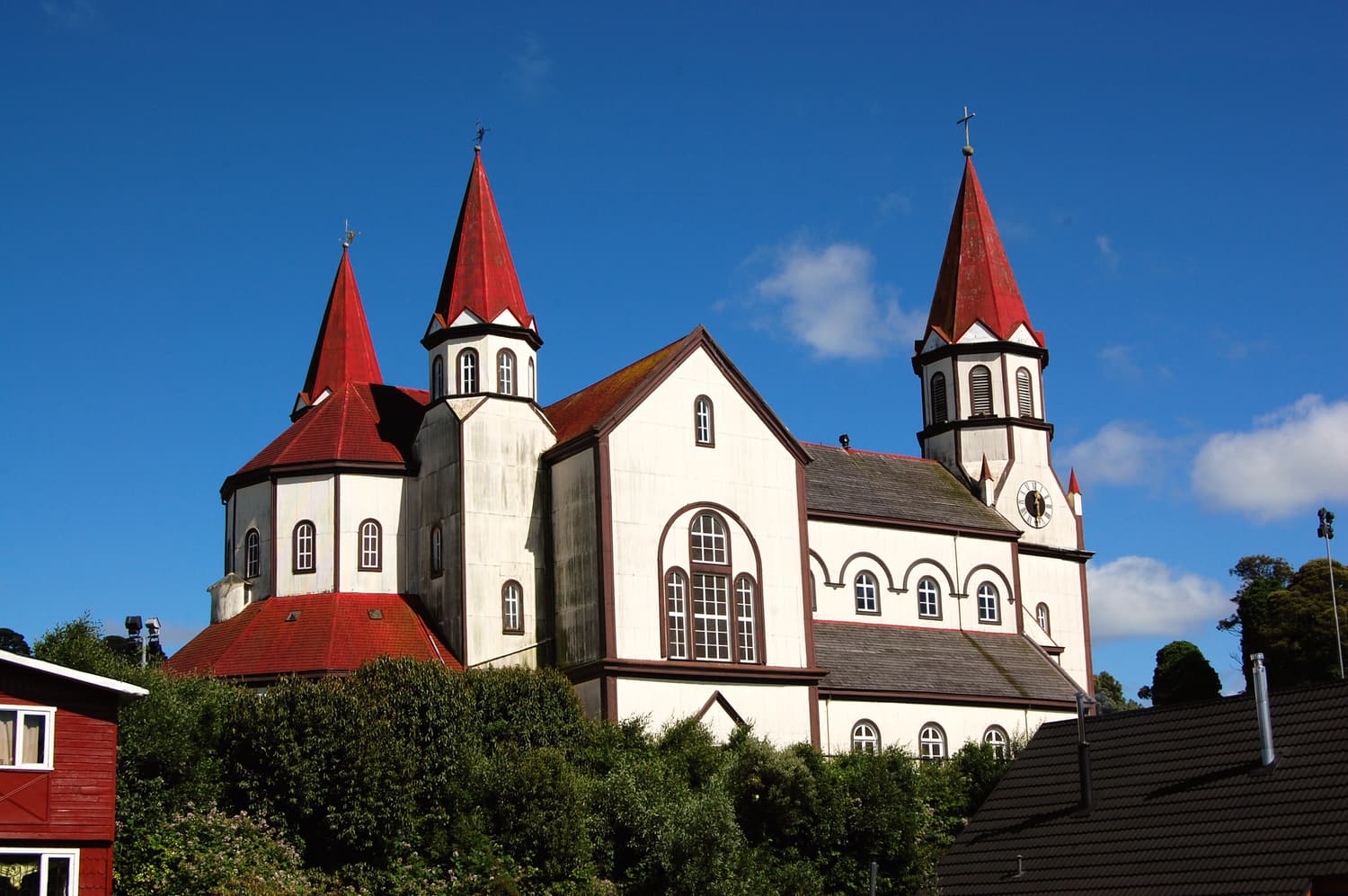 Puerto Varas & Lake Llanquihue
Puerto Varas
The City of Roses on Lake Llanquihue
A small lake town founded by German settlers in the 1850s, with shingled wooden houses, a red-roofed church copied from the Black Forest and a waterfront where the Osorno volcano fills the view on a clear day. It is the Lake District’s best base for tours, food and hotels.
 Vicente Pérez Rosales National Park
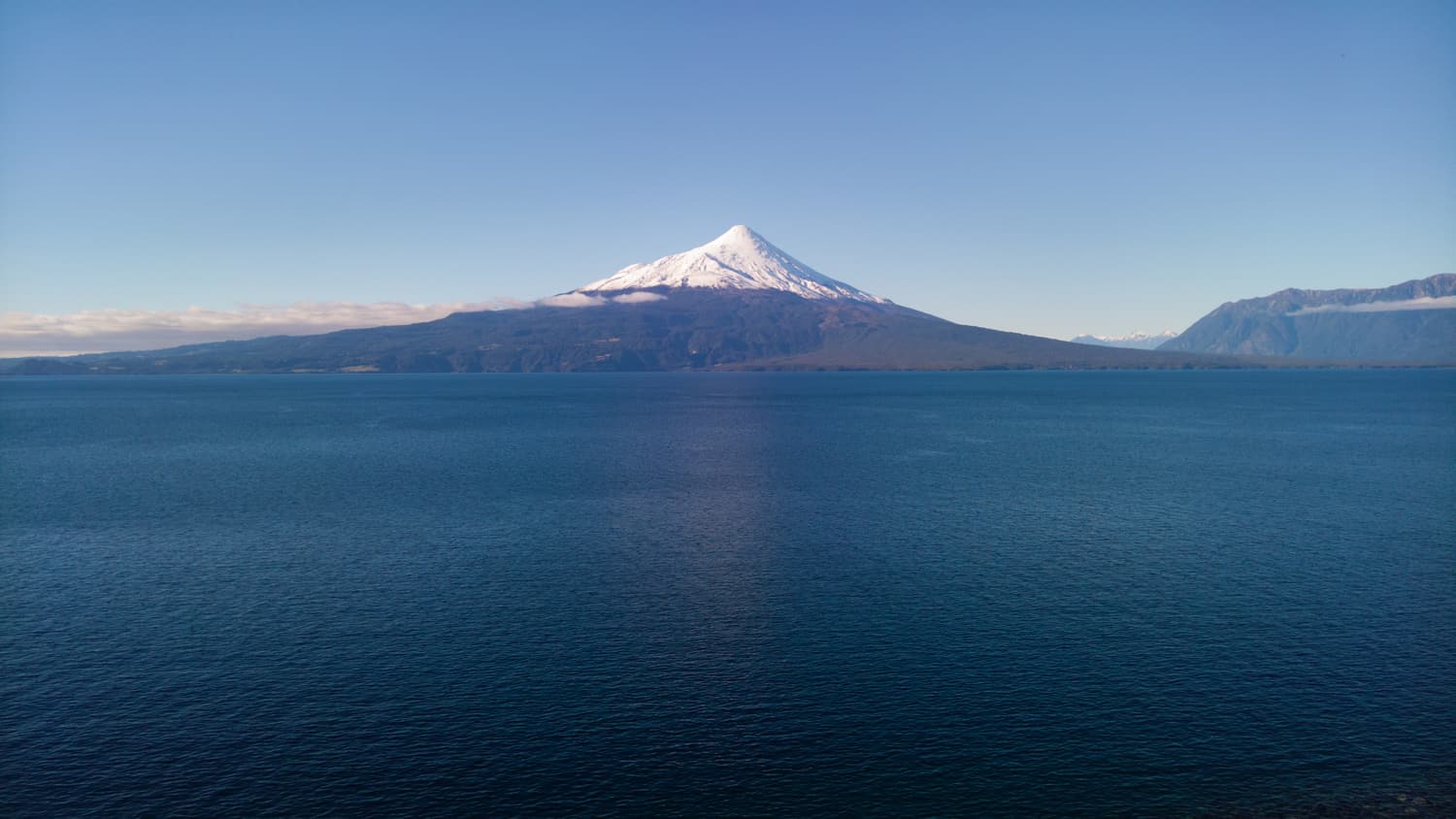
Osorno Volcano
Chile’s most perfect cone
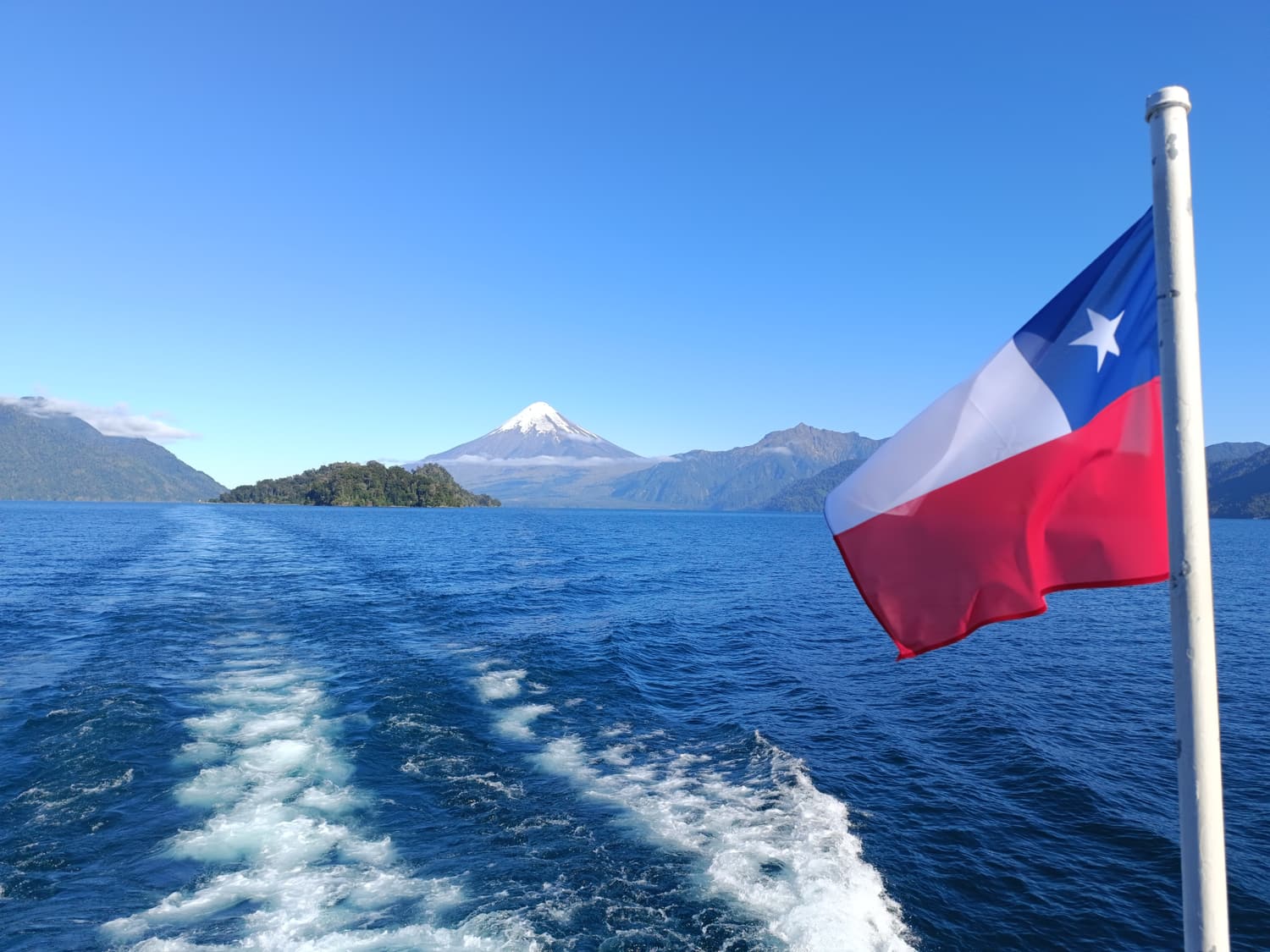
The 2,652 m snow-capped cone that rises above Lake Llanquihue and appears on half the postcards in Chile. A road climbs its western flank to a ski and mountain centre with chairlifts, craters and lava fields — a volcano you can visit in an afternoon.
 Vicente Pérez Rosales National Park
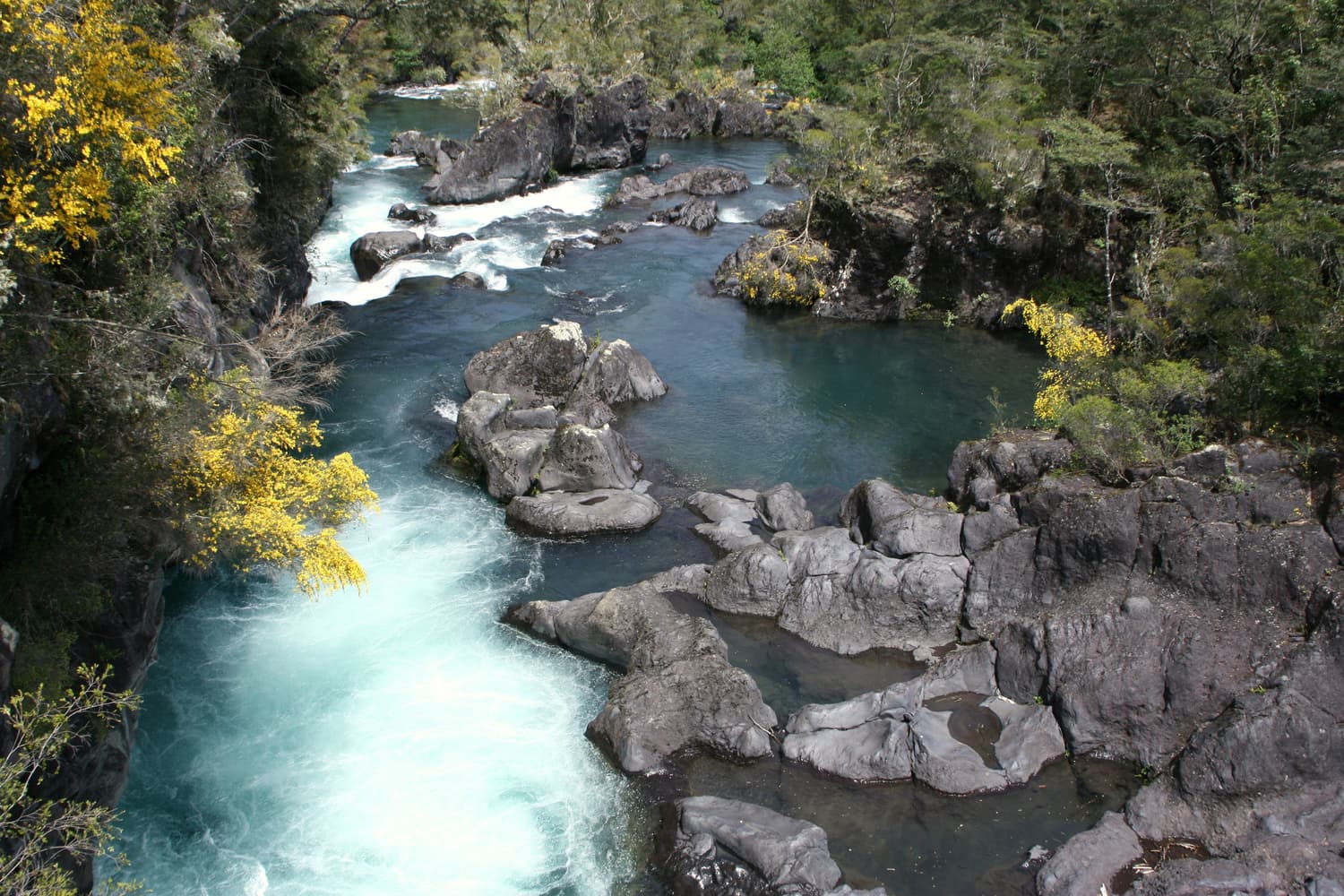
Petrohué Waterfalls
Turquoise water over black lava
Not a tall waterfall but a thundering series of rapids where the Petrohué river forces its way through channels of basalt left by the Osorno volcano. Short forest trails and viewing platforms put you right beside the water, with the volcano behind.
 Vicente Pérez Rosales National Park
Todos los Santos Lake
The emerald lake with no road around it
A long, green-blue glacial lake wedged between the Osorno, Puntiagudo and Tronador volcanoes, with only forest on its shores. Boats from Petrohué cross it to the remote village of Peulla — the first leg of the famous Andean lakes crossing to Bariloche.
See all of them, with directions and tours, in our things to see guide.
Activities
- Rafting and kayaking on the Petrohué river, Lake Llanquihue and the Maullín river.
- Hiking in Vicente Pérez Rosales and Alerce Andino national parks, from short forest walks to Paso Desolación.
- Hot springs around Cochamó and the Reloncaví estuary — ideal on wet days.
- Horse riding in the valleys of Cochamó and around the lake.
- Skiing on the Osorno volcano in winter, snow permitting.
- Cycling the lakeshore — there is a cycle path along much of the road towards Ensenada.
What it costs
Puerto Varas is one of the more expensive towns in southern Chile, especially in January and February. Indicative prices:
| Item | Indicative price |
|---|---|
| Osorno volcano + Petrohué day tour | From about US$55 |
| Todos los Santos & Peulla day tour | From about US$55–65 |
| Rafting on the Petrohué | From about US$45 |
| Cruce Andino to Bariloche | From about US$355 |
| Airport shuttle (shared, one way) | From about US$22 |
| Kuchen and coffee | A few thousand pesos — check menus |
| Park entrance (Petrohué falls) | Small fee; check current CONAF rates |
What to eat
The Lake District eats well. Look for salmon, trout and southern shellfish, lamb, wild mushrooms and berries. From the German settlers come kuchen (fruit cakes — raspberry, murta, apple), strudel and a strong craft-beer culture. From Chiloé comes curanto, seafood and meat cooked over hot stones, and potato breads called milcao and chapalele. And everywhere, the Chilean staples: empanadas, pastel de choclo and a pisco sour at sunset.
Where to stay
Stay in Puerto Varas itself if you can — it is walkable and every tour picks up there. Options fall into three groups:
- Lakefront hotels in the centre, with pools and volcano views.
- Heritage boutiques and guesthouses in the wooden houses of the old quarter.
- Lakeshore retreats towards Ensenada, or in Frutillar for concerts.
We compare the best of each, with live rates, on our where to stay page.
Practical details
- Money: Chilean peso (CLP). Cards are widely accepted; carry some cash for minibuses, markets and small cafés. A 10% tip (propina) is customary in restaurants and is usually suggested on the bill.
- Language: Spanish. English is spoken in hotels and by tour operators; less so elsewhere.
- Safety: Puerto Varas is very safe. Normal precautions apply in Puerto Montt bus stations. Follow official guidance if a volcanic alert is raised.
- Connectivity: 4G is good in town and along the main roads; patchy deep in the park and on the lake.
- Power: 220 V, type C and L plugs.
What to pack
- A proper waterproof jacket — in any season.
- Warm layers: evenings are cool even in summer, and it is much colder on the volcano.
- Waterproof walking shoes for forest trails and wet volcanic rock.
- Sunscreen and sunglasses: when the sun comes out, it is strong.
- Insect repellent in January, when tábano horseflies are active.
Common mistakes
- Planning the volcano for your last day. If it is cloudy, you will miss it — do it first.
- Trying to see Chiloé, the volcano and the lake crossing in two days.
- Leaving the Cruce Andino or summer hotels to the last minute.
- Packing for "summer" and forgetting the rain jacket. See when to visit.